Englefield in World War 2
Military Service
Despite the restrictions of the reserved occupations list a number of men from Englefield did go into full-time war service.
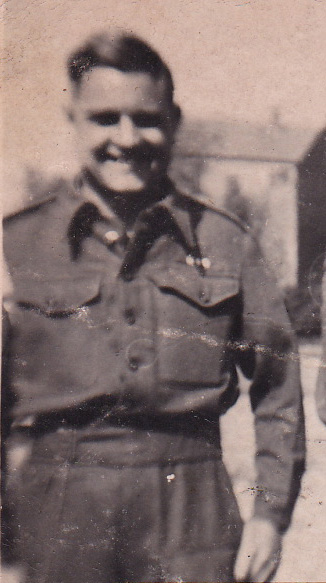
James Cook, the only son of Mr and Mrs Cook at the Working Men’s Club, and his great pal Harry Day, son of George Day the Blacksmith at Mayridge Farm, from 57 Parker’s Corner (next door to George and Mary Nash who had lost two sons in the First World War) had already enlisted in the Territorial Army at Reading on 26th April 1939.
As had happened with some of the Englefield Territorials the last time, the outbreak of war found their Royal Engineer unit on their Annual Camp at Stanbury Park, Shinfield and they were mobilised on 2nd September, the day before Prime Minister Neville Chamberlain told the nation in that famous radio broadcast that “...consequently this country is at war with Germany”. However, when his unit was sent to France James was still too young for overseas deployment so he was sent to Northern Ireland.
In November 1942 he transferred into 9th Field Company RE, part of the newly-formed 1st Airborne Division. Just a week later a group from the Company suffered the débâcle of Operation FRESHMAN, an attack on a German heavy water plant in Norway in an attempt to prevent them making a nuclear weapon. All of those on the operation perished, either killed when their gliders crashed or executed by the Germans on the orders of Hitler after being taken prisoner.

2069925 Spr Cook J
With 9 Coy he served in North Africa in 1943 and then on Operation HUSKY, the invasion of Sicily. One of the Coy’s tasks was to secure two key bridges and remove the demolition charges. 1st Airborne did not take part in the D-Day landings on 6th June but 9 Coy were at Greenham Common between the 9th and 13th at 24 hours notice to move in case reinforcements were needed in France.
On 17th September 1st Airborne’s turn came with Operation MARKET GARDEN to Arnhem. Flying from Keevil airfield, 9 Company’s gliders would have passed very close to, if not over, Englefield during the Morning Prayer service that Sunday as shown in the film A Bridge Too Far. James Cook was wounded on the march from the landing zone towards the bridge but managed to get to Oosterbeek. During the evacuation on the night of 24th/25th September he reached the river but was taken prisoner on the morning of the 25th before he could get across. This was six months before the end of the war - an exact echo of his father’s experience in the Great War. After being moved around various camps in east Germany he ended up in Czechoslovakia working in a coal mine. He was released by the Russian Army in June 1945 and returned home in July.
Vic Briant who had been just old enough to be conscripted into the newly-formed RAF in April 1918 and, although now married, was still living, with his wife, in the same house with his mother and father as he was then (24 The Street). He had been apprenticed as a carpenter on the Estate at the age of 14 but in the 1939 Register was listed as a sawyer - another Reserved Occupation. That did not preclude him being an early volunteer as an Air Raid Warden but, in contrast to Jack Smith’s experience, at the age of 38 in 1939 he was somehow able to rejoin the RAF without any apparent problems.
He spent some time after the war at the Peace Conference and remembered meeting Winston Churchill: “I helped him on with his flying suit many a time - I got on well enough with him, but he certainly could use some language”, he said.

Frank Lamperd, living with his parents at 52 Parker’s Corner when the war started, also enlisted with the Royal Engineers in February 1940 in his civilian trade of blacksmith. He served in the Middle East, North Africa and, from D-Day, in North West Europe. In December 1944 he was awarded the Commander-in-Chief’s Certificate for Good Service by Field Marshal Montgomery.
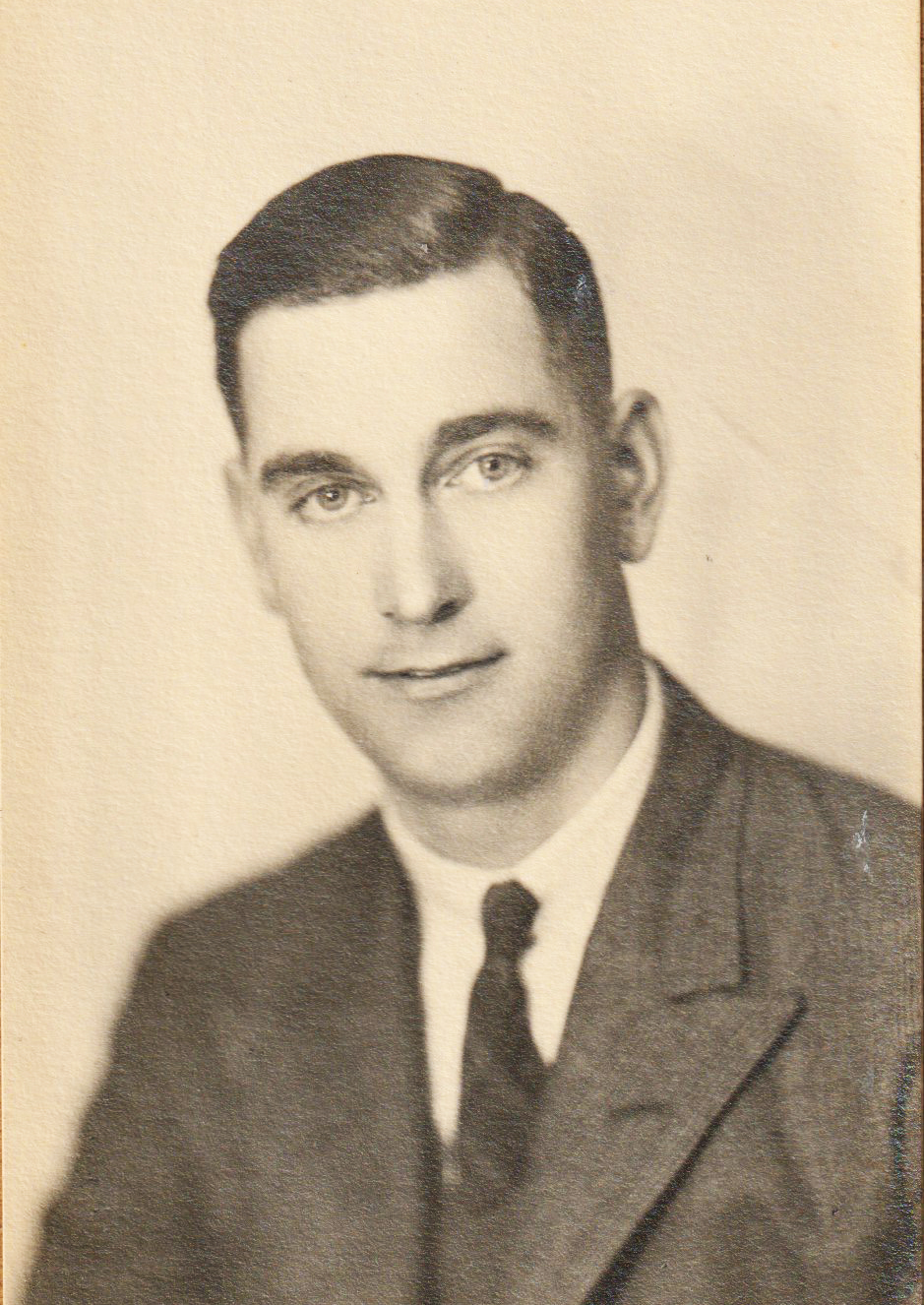
Jack Smith, one of the Home Guard, from No 10 in The Street, volunteered for Regular service in the RAF in December 1940 and in January 1941 reported to Cardington, Bedfordshire and from there he was sent to Bridgnorth in Shropshire for his initial training. However, only a matter of weeks later he suddenly arrived home again having been shown a letter by his CO in which his employers had claimed he was ineligible for full time service as he was in a reserved occupation. This was true but in his case as a painter and decorator, only from the age of 30 and he was at that time 27.
After some communication with RAF Records back came another rail warrant and instructions to return to Bridgnorth forthwith. When his initial training was complete he was posted to Skegness for the next stage, where he was designated for the RAF police and his next posting was to Kidbrooke in south east London. This meant going on patrol in London looking for people who had gone AWOL, then it was to Uxbridge for final police training and exams. He spent the entire war guarding airfields and radar stations in south Devon, Cornwall and south Wales, once being taken off a draft to India almost at the aircraft steps because there was something wrong with his documentation. When he came to be “de-mobbed” in 1946 there was some difficulty because it was discovered that he had never actually been properly enlisted and there were no documents held, presumably a result of the reserved occupation business in 1940. Eventually his discharge papers were stamped “No documents held” and he was released.
Vic Smith, Jack Smith's younger brother, always known later as “Bunter” for his supposed resemblance to Billy Bunter, the corpulent schoolboy creation of author Frank Richards, though at the time of enlistment, while only 5ft 5ins tall he was also only 8 stone - joined the Royal Engineers in 1940. He was a carpenter and joiner for the Estate, a reserved occupation but he was only 20 at the time so, like his brother, under the age for reservation which was 25. In any case enlisting in ones civilian trade was allowed, which is what he did. He served in North Africa and North West Europe.