Englefield in World War 2
Bombs
Some bombs did fall around the local area, whether deliberately aimed or simply jettisoned in consequence of the aircraft being unable to bomb its intended target is not known, but probably the latter. The closest to Englefield these came was on two occasions in 1940. In neither case was any casualty or significant damage reported, though in the second case especially, this must have been due only to the greatest good fortune and surely there must have been at least broken windows.
Mayridge
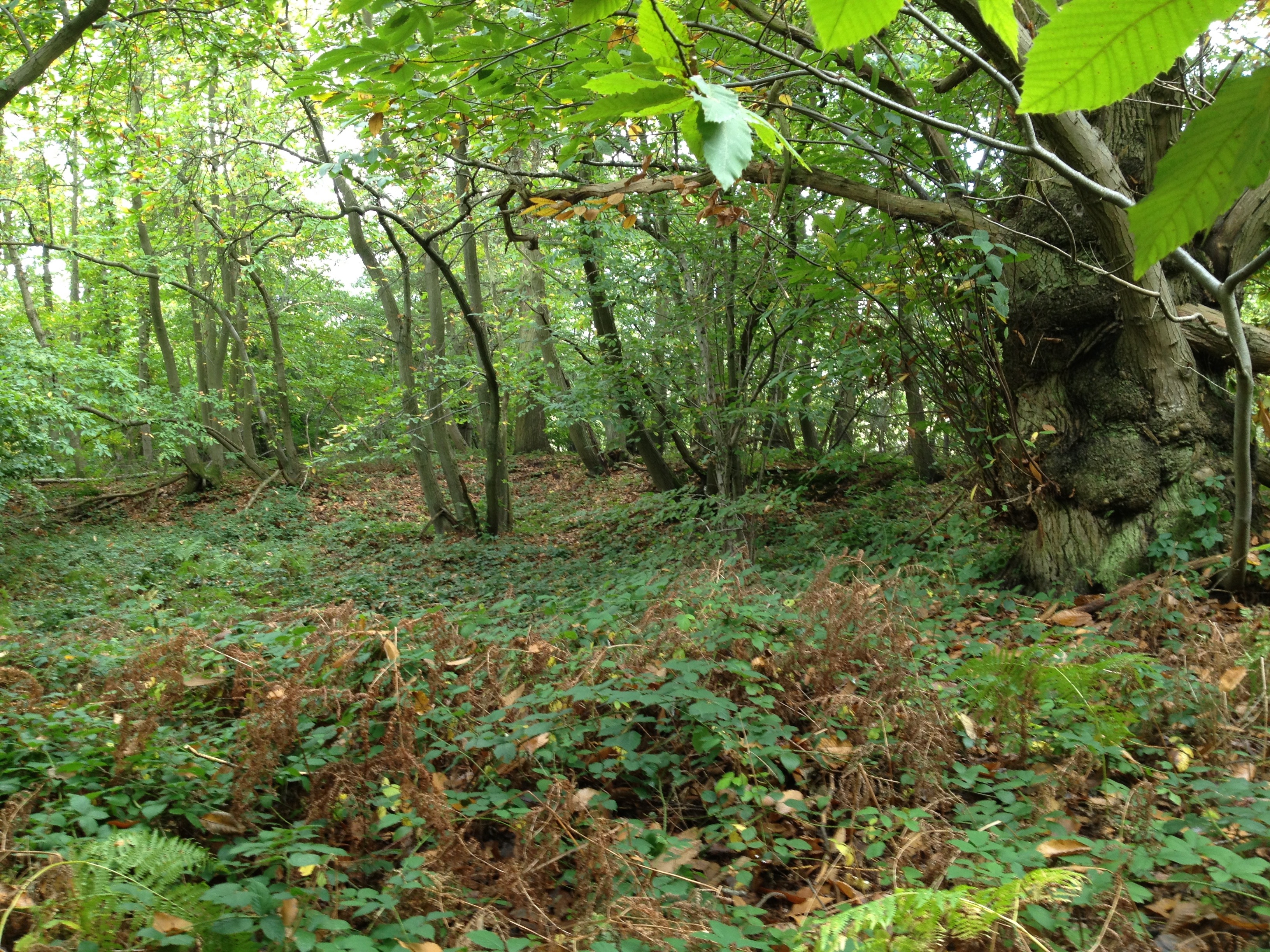
The first time bombs fell near Englefield was at 0105 on 1st October 1940. Two high explosive bombs landed on the ridge 600 yards north west of Mayridge Farm where there appear to be two small craters, just about discernible inside Andrew’s Copse not far from the road up the hill though they are now filled with over 80 years’ worth of leaf litter. One bomb exploded immediately but the second was on a delay fuse, probably intended to catch rescue or bomb disposal personnel, and didn’t explode until 0830. As there was no risk to life or property from the delayed bomb, it was just left to expend itself harmlessly.
Bournefield
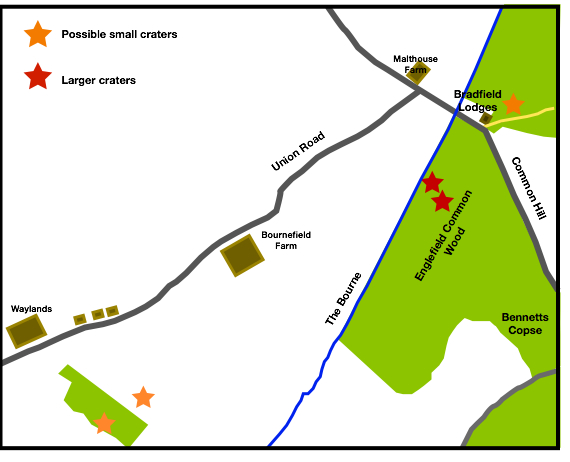
The other time that bombs fell in the vicinity was shortly after that, on the night of 21st/22nd October 1940. The official report from that night mentions 11 bombs landing in a line across the fields to the south of Bournefield Farm. More than eighty years on there is little or no trace in the fields except for what may be the remains of a crater after many years of cultivation in the field to the east of the wood in front of the houses on Union Road. There may also be another crater close to the other side of the wood in front of the old Waylands Hospital site. At the other end of the line, there are also two craters in the Deer Park behind the Bradfield Lodges that were very obvious in the 1950s when they were said locally to be from the bombs, though they are much less clear now as nature reclaims them.
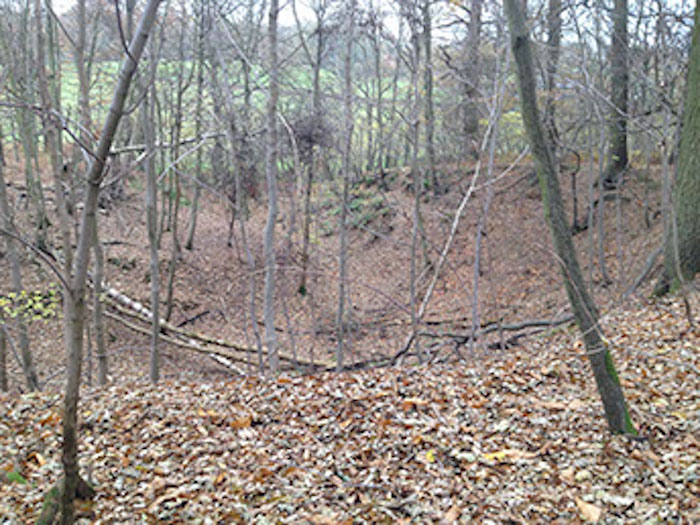
There are clearly visible two very large and deep holes (pictured opposite and indicated by orange circles on the map) in the wood at the bottom of Common Hill opposite the Bradfield Lodges but it is by no means certain that these are from the bombs and at least one of them is probably the old sand pit that was there.
The German Heinkel HE111 bomber of the time could carry eight 250kg bombs internally and two 1000kg bombs externally, making 10 in all so the report of 11 may be the result of miscounting. The smaller, internally carried, bombs were held vertically in a nose-up position, four on each side of the fuselage, and were released sequentially from alternate sides rather than all at the same time as with British bombers. This gave a distinctive pattern of two long, closely-spaced but staggered rows of bomb craters which seems to fit the pattern at Bournefield. This relatively small and scattered bomb load was ideal for the sort of highly-mobile combined air-land offensive that the Germans mounted in Belgium and France because it created a shock effect on defenders but didn’t cause so much damage that it compromised freedom of movement for the attacking ground forces. In contrast, the RAF and USAAF bombers such as the Avro Lancaster and Flying Fortress, which unloaded a huge quantity of explosive on more or less the same spot, were very effective in the attrition of the enemy’s capacity to fight (which was what was required) but, as the Allied armies found when they reached the German cities, the destruction caused provided ideal cover for defenders and was as effective at preventing movement in tanks as the “dragon’s teeth” we had deployed in 1940.